Migraine Nursing Management: An Evidence-Based Guide for Clinical Nurses
Back to Blog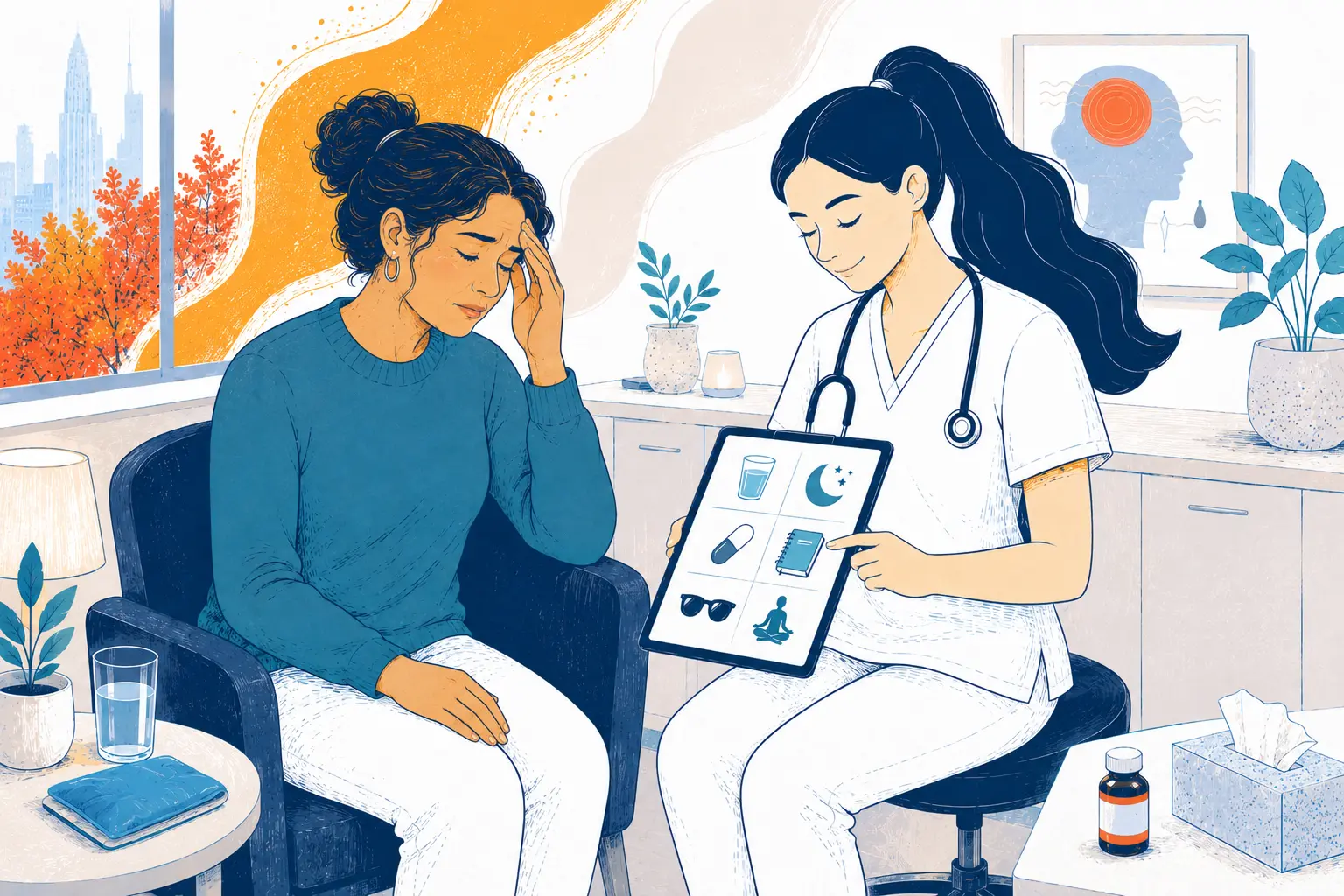
Authored by Dr. Pam Vollmer, DNP, RN, AMB-BC, NPD-BC, CEO and Director of Content at CE Ready
What Nurses Need to Know
Migraine nursing management is the care nurses provide across the full arc of an attack. It runs from recognizing the early phases to supporting treatment and teaching prevention. Migraine is far more than a bad headache. It is a neurological disease that moves through phases, often prodrome, aura, the headache itself, and postdrome. Strong nursing care starts with a careful history and an eye for warning signs of a more serious cause. From there, nurses help deliver acute treatment, which works best at the first sign of an attack. They also support preventive therapy for patients with frequent migraines. A major part of the job is education. Teaching patients to track triggers, use medication correctly, and avoid overuse can sharply reduce how often migraines strike. Done well, migraine nursing care eases pain and helps patients reclaim the days a migraine would take.
Picture Lena, a clinic nurse, watching a young patient shade her eyes from the overhead lights. The woman describes a throbbing pain behind one eye, nausea, and an odd shimmer in her vision an hour earlier. Many would call it just a headache and move on. Lena recognizes a migraine with aura, asks the right questions, and starts a treatment plan before the pain peaks.
Migraine Is More Than a Headache
Migraine is one of the most common and disabling conditions a nurse will ever encounter. According to the World Health Organization, headache disorders affect roughly 40 percent of people worldwide. Migraine ranks among the leading causes of disability on the planet. This is not a minor complaint to wave off with a suggestion to drink water and rest.
Part of what makes migraine so burdensome is how often it goes unrecognized. The WHO points out that headache disorders are widely under-diagnosed and under-treated, and that limited provider knowledge is a major barrier to good care. That is exactly where an informed nurse changes the story.
Migraine is a neurological disease, not simply a pain symptom. Attacks typically last from a few hours to three days. They often bring nausea, vomiting, and sensitivity to light and sound. Because the disease is recurrent and frequently lifelong, your patients need more than relief for today. They need a partner who understands the condition and helps them manage it over time.
The Four Phases of a Migraine Attack
One of the most useful things a nurse can understand about migraine is that an attack unfolds in phases. Not everyone experiences every phase, and they do not always occur in the same order. Still, knowing the pattern helps you recognize a migraine earlier and act sooner.
The American Migraine Foundation describes four phases. Prodrome can begin hours or even days before the pain. It brings subtle clues like mood changes, fatigue, food cravings, or frequent yawning. Aura follows for some patients, though only about a quarter to a third experience it. It usually appears as visual changes or tingling. The headache phase brings the pain most people associate with migraine. Postdrome, sometimes called the migraine hangover, can leave a person drained and foggy for a day afterward.
| Phase | What the patient may notice | Why it matters to nurses |
| Prodrome | Mood shifts, fatigue, food cravings, or yawning, hours to days before the pain | An early window to start treatment and avoid triggers |
| Aura | Visual changes, flashing lights, tingling, or trouble speaking, just before the headache; in about one in four to one in three patients | A warning sign and a cue for early acute medication |
| Headache | Throbbing pain, often one-sided, with nausea and light or sound sensitivity, lasting hours to days | The core phase for treatment and comfort measures |
| Postdrome | Fatigue, body aches, and trouble concentrating, the so-called migraine hangover | Recovery and rest; the attack is not fully over |
Why does this matter at the bedside? Because the earlier a migraine is recognized, the better acute treatment tends to work. A nurse who spots prodrome or aura can prompt early action that may blunt the attack.
Assessment at the Bedside
Good migraine nursing management begins with a thorough history. Ask about the location, quality, and timing of the pain, along with anything that makes it better or worse. Migraine pain is often one-sided and pulsating, moderate to severe, and worsened by routine activity. It frequently comes with nausea and sensitivity to light and sound.
Just as important is watching for signs that the headache might not be a migraine at all. Several deserve urgent evaluation. Examples include a sudden thunderclap headache, a headache after head trauma, or new neurological symptoms. Fever with a stiff neck or a major change from the usual pattern also raises concern. Any of these can point to a more serious cause.
Encourage patients to keep a headache diary. Tracking the date, duration, symptoms, suspected triggers, and medications used turns vague memories into a clear pattern. That record helps the whole care team fine-tune diagnosis and treatment. It also gives the patient a sense of control over an unpredictable condition.
Acute and Preventive Treatment
Migraine treatment falls into two broad camps, and nurses support both. Acute treatment aims to stop an attack that is already underway. Preventive treatment aims to reduce how often attacks happen in the first place.
The World Health Organization notes that acute medications work best when taken at the very first sign of an attack. Acting during aura, before the pain peaks, can make a real difference. That timing is a perfect teaching moment. Many patients wait until the pain is severe, then wonder why relief is slow. Acute options range from analgesics and anti-nausea medications to migraine-specific drugs. For patients with frequent or disabling attacks, the care team may add preventive, or prophylactic, medication taken regularly.
Your role spans administration, monitoring, and teaching. Give medications correctly, watch for side effects, and make sure the patient understands the plan. Above all, reinforce the idea of treating early. A patient who acts at the first warning sign often needs less medication and recovers faster than one who waits.
Do Not Miss Medication Overuse Headache
Here is a twist that surprises many patients. The very medications used to treat migraine can, when overused, make headaches worse. This is called medication overuse headache, and the World Health Organization identifies it as the most common secondary headache disorder.
The pattern is sneaky. A patient takes acute medication more and more often as attacks increase. Over time, that frequent use can drive a near-daily headache that is worst in the morning. Breaking the cycle usually means cutting back on the overused medication, ideally with guidance from the care team.
Nurses are well placed to catch this early. When you take a medication history, ask not just what a patient takes but how often. Gentle education makes a difference here. Help patients understand that more is not always better. Frequent acute medication use is a signal to revisit the plan, not a reason to take another dose.
Triggers, Lifestyle, and the Power of Patient Education
So much of migraine nursing care happens through teaching. The World Health Organization emphasizes that simple education on triggers, lifestyle, and medication use is highly effective. It can be as valuable as the medications themselves.
Start with triggers. Common ones include alcohol, skipped meals, dehydration, poor sleep, and stress. Help each patient identify their personal triggers through that headache diary, then build small, realistic habits around them. Regular sleep and meal schedules, steady hydration, and consistent exercise can meaningfully reduce attacks for many people.
Education also means setting expectations. Migraine is usually a lifelong condition, so the goal is fewer and milder attacks, not a single cure. When patients understand that, they tend to stick with their plans instead of abandoning them after one rough week. A nurse who teaches with patience and warmth gives patients something medication alone cannot. That gift is the confidence to manage their own migraine over time.
Building Migraine Confidence With CE for Nurses
Migraine is common enough that you will see it everywhere, yet nuanced enough that confident care takes real knowledge. The difference between brushing off a headache and recognizing a treatable migraine often comes down to education.
Focused migraine CE for nurses can sharpen exactly those skills. It covers reading the phases and guiding patients away from medication overuse. CE Ready’s migraine course gives LPNs, RNs, and APRNs a practical foundation in migraine assessment, treatment, and patient education. Because the material reflects current clinical understanding, you can bring it straight to the bedside.
That kind of preparation pays off in quiet, important ways. The next patient who walks in shading their eyes from the light will be glad you knew what to look for.
Frequently Asked Questions
What is the nurse’s role in migraine management?
The nurse’s role in migraine management includes recognizing the condition, assessing the patient, supporting treatment, and teaching prevention. Nurses take a careful headache history and watch for warning signs of more serious causes. They help deliver acute and preventive treatment, and educate patients on triggers and medication use. This combination of clinical skill and patient teaching is central to reducing how often migraines disrupt a patient’s life.
What are the four phases of a migraine?
The four phases of a migraine are prodrome, aura, headache, and postdrome. Prodrome brings early warning signs like mood changes or fatigue. Aura involves visual or sensory changes in some patients. The headache phase brings the pain, and postdrome is the recovery period often called the migraine hangover. Not everyone experiences all four phases, and the pattern can vary between attacks.
When should migraine medication be taken for the best effect?
Acute migraine medication works best when taken at the very first sign of an attack, according to the World Health Organization. For some patients, that means treating during prodrome or aura, before the pain becomes severe. Teaching patients to act early, rather than waiting until the headache peaks, is one of the most valuable things a nurse can do.
What is medication overuse headache?
Medication overuse headache happens when frequent use of acute headache medication starts to cause more headaches rather than fewer. The World Health Organization calls it the most common secondary headache disorder. Nurses can help by asking how often patients use their medication and teaching that frequent acute use is a signal to revisit the treatment plan with their provider.
What warning signs mean a headache might be serious?
Certain features suggest a headache may not be a routine migraine and needs urgent evaluation. Examples include a sudden thunderclap headache, a headache after head trauma, or new neurological symptoms. Fever with a stiff neck or a major change from the usual pattern also raises concern. Nurses who recognize these red flags help patients get timely care for potentially serious causes.
How can nurses help patients prevent migraines?
Nurses help prevent migraines mainly through education. Encourage patients to keep a headache diary, identify and manage personal triggers, maintain regular sleep and meals, stay hydrated, and use medications correctly. The World Health Organization notes that these simple lifestyle and education measures are highly effective at reducing attacks.
Is migraine CE available for nurses?
Yes. Accredited providers offer migraine CE for nurses that covers assessment, the phases of migraine, treatment, and patient education. CE Ready’s migraine course is built for LPNs, RNs, and APRNs and reflects current clinical guidance. Choosing an ANCC-accredited course ensures the education meets rigorous standards and counts toward license renewal in most states.
Help Patients Reclaim the Days Migraine Takes
Every migraine you help a patient prevent is a day given back, a shift worked, a moment with family kept. That is the quiet power of skilled migraine nursing management. CE Ready is an ANCC-accredited nursing education provider, provider number P0986, based in St. Petersburg, Florida. It offers an evidence-based migraine course for LPNs, RNs, and APRNs, along with a full library of chronic disease courses. Explore the migraine course, match it to the patients you serve, and turn required hours into more confident care.
References
American Migraine Foundation. (n.d.). The phases of migraine. https://americanmigrainefoundation.org/resource-library/phases-of-migraine/
American Migraine Foundation. (n.d.). The timeline of a migraine attack. https://americanmigrainefoundation.org/resource-library/timeline-migraine-attack/
American Nurses Credentialing Center. (n.d.). Nursing continuing professional development. American Nurses Association. https://www.nursingworld.org/organizational-programs/accreditation/ncpd/
World Health Organization. (2025). Migraine and other headache disorders. https://www.who.int/news-room/fact-sheets/detail/headache-disorders