Teaching Moments: The RN’s Role in Patient Education
Back to Blog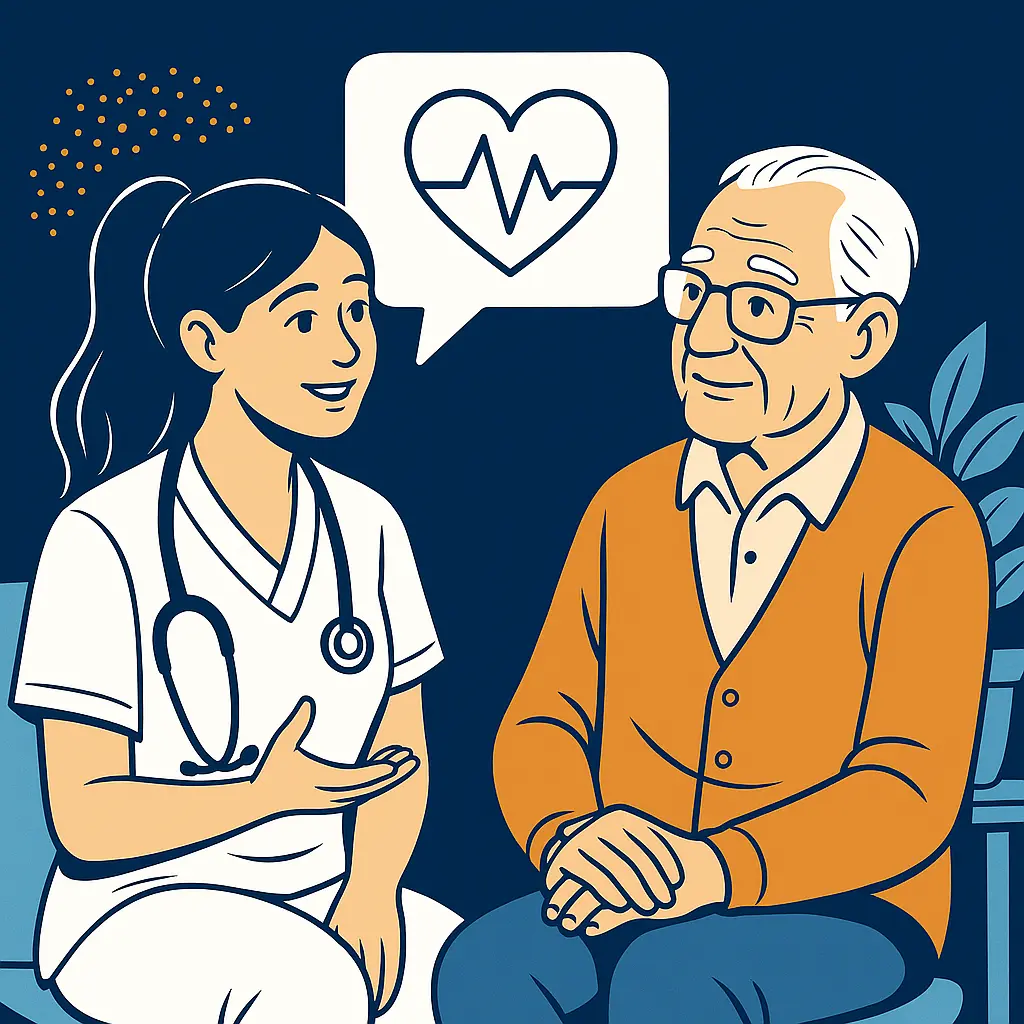
Authored by Dr. Pam Vollmer, DNP, RN, AMB-BC, NPD-BC, CEO and Director of Content for CE Ready
Behind every effective treatment plan is a well-informed patient, and it’s often the Registered Nurse (RN) who provides that education. While doctors diagnose and prescribe, RNs are the ones who ensure patients understand their conditions, treatments, and what comes next. Nurses teach every day at the bedside, during home visits, in outpatient clinics, and via telehealth platforms. These educational moments directly improve patient safety, health outcomes, and satisfaction. This blog explores how RNs fulfill their vital role as educators.
What Nurses Need to Know
Patient education is one of the most evidence-based interventions in nursing, and the American Nurses Association identifies teaching as a core implementation standard in its Nursing Scope and Standards of Practice. When patients understand their condition, their treatment plan, and the warning signs that should prompt them to seek help, outcomes improve measurably. Lower readmission rates, better medication adherence, and fewer preventable complications are all consistently linked to effective nursing education. The Joint Commission includes patient education as an accreditation requirement across clinical settings. That standard reflects a clear professional expectation: educating patients is not optional. RNs are uniquely positioned to lead that education because they spend more time with patients than any other member of the care team. CE Ready is a Florida-based ANCC-accredited continuing education provider (provider number P0986). It offers flexible, self-paced CE for LPNs, RNs, and APRNs across dozens of states at ceready.com.
Sofia has been an RN in a cardiac step-down unit for four years. Last fall, she spent twenty minutes with a patient who had been admitted twice in three months for heart failure exacerbations. The issue was not the medications. Nobody had explained, in plain language, what a low-sodium diet actually looks like on a real plate. Sofia walked through it, item by item, with the patient’s wife in the room. That patient has not been readmitted since. Patient education does not always feel like a clinical intervention. That day, it was exactly that.
Why Patient Education Is a Clinical Responsibility
Patient education is not an optional addition to clinical care. The American Nurses Association identifies teaching as a core implementation standard in its Nursing Scope and Standards of Practice. That designation reflects a professional expectation, not a soft suggestion.
When patients understand their condition, their medications, and the warning signs that warrant action, outcomes improve measurably. Research consistently links effective patient education to lower readmission rates, better medication adherence, and fewer preventable complications. Because of that evidence base, the Joint Commission includes patient education as a formal accreditation standard across clinical settings.
RNs are uniquely positioned to lead this work because they spend more direct time with patients than any other care team member. Bedside conversations, clinic visits, and home assessments all create natural teaching opportunities. Beyond those moments, nurses also bring the clinical assessment skills to gauge what each patient already understands before teaching begins. Knowing where to start is as important as knowing what to say.
Throughout your career, patient education will look different depending on where you practice. In the ICU, it often means helping families understand a prognosis and what recovery may involve. Home health nurses teach caregivers to manage wounds, recognize early signs of infection, or use medical equipment safely. Wherever you work, the setting changes what you teach. Your responsibility to teach does not change.
Medication Education: When Instructions Become Safety
Medication errors are among the most common causes of hospital readmission, and many are preventable with adequate education at discharge. RNs play a central role in closing that gap. During medication teaching, nurses explain what a medication is for, how and when to take it, what side effects to expect, and which symptoms warrant a call to the provider.
That teaching becomes especially important for patients managing multiple prescriptions, older adults with complex schedules, and anyone starting a medication for the first time. Interactions with food or other drugs are another critical area. For instance, patients taking blood thinners need to understand how certain foods affect clotting levels. Patients on statins should know about grapefruit. Those details are rarely retained after a single explanation, so repetition and written reinforcement both matter.
Storage and safe disposal of medications are also part of this teaching, particularly for controlled substances and opioids. Because improper disposal creates real community safety risks, that education extends beyond the individual patient. Demonstration matters too. Patients using inhalers, insulin pens, or topical applications often need to practice the technique before they are ready to manage independently at home.
The Agency for Healthcare Research and Quality identifies patient education as a core strategy for reducing medication errors across care settings. CE in communication and pharmacology directly supports the teaching skills nurses need to do this well.
Post-Procedure Teaching and Discharge Education
Discharge education is one of the highest-stakes teaching opportunities in nursing, and one of the most compressed. Patients are leaving the safety of a monitored environment. Whether they are headed home, to a rehabilitation facility, or into a family member’s care, they need clear information about what comes next.
After surgery or a significant procedure, patients and families need guidance on wound care, activity restrictions, dietary recommendations, and follow-up expectations. Nurses teach dressing change techniques, what early signs of infection look like, and when it is safe to resume driving or return to work. Each of those details can prevent a complication or an unnecessary emergency visit.
Written materials are valuable, but they do not replace conversation. Handing a patient a discharge packet without reviewing it alongside them leaves significant room for misunderstanding. Nurses walk through materials with the patient, answer questions as they arise, and take note of which instructions generate the most confusion. Those notes inform what deserves extra attention before the patient leaves.
Emotional readiness also affects learning. A patient who is anxious, in pain, or still processing a new diagnosis may not absorb verbal instructions reliably. Recognizing that and adjusting the timing or delivery of teaching is itself a clinical skill. The Joint Commission requires documentation that discharge education was provided and that patient comprehension was assessed. Nurses carry that responsibility directly.
Chronic Disease Education and Long-Term Self-Management
Chronic disease education is some of the most consequential teaching nurses do. Patients managing diabetes, heart failure, COPD, hypertension, or chronic pain carry long-term responsibilities that extend well beyond any single appointment. Helping them understand those responsibilities in practical, sustainable terms is what makes the difference between a patient who manages and one who cycles through the emergency department.
Diabetes education is a clear example. Teaching a patient to check blood glucose, interpret readings, adjust carbohydrate intake, administer insulin, and recognize hypoglycemia is a structured curriculum delivered across multiple interactions. Each skill builds on the previous one, and return demonstrations confirm that learning has actually occurred.
Heart failure education follows a similar logic. Patients learn to weigh themselves daily, track fluid intake, reduce sodium, and recognize early signs of decompensation before those signs become emergencies. Nurses who teach this effectively are doing prevention work, even in an acute care setting. That framing matters. It elevates the clinical value of the conversation.
COPD and asthma education often centers on inhaler technique, trigger avoidance, and recognizing a flare. Many patients who use inhalers use them incorrectly, which means they receive less of the medication than intended. A nurse who takes five minutes to observe technique and correct it is delivering an evidence-based intervention with measurable impact. The Comprehensive Pain Management in Nursing: Principles, Tools, and Applications course builds the clinical depth that pain-related patient teaching demands.
Health Literacy and Tailoring the Message
Effective patient education starts with knowing who you are teaching. Health literacy, defined as the degree to which individuals can obtain, process, and understand health information, varies significantly across patient populations. Most patient education materials are written at a reading level that many patients cannot navigate independently.
Skilled nurses assess health literacy informally throughout the encounter. They listen for vocabulary gaps, watch for confusion a patient may be too embarrassed to name, and adjust language accordingly. Plain language, visual aids, and simple analogies all help close the gap. Avoiding medical jargon does not mean oversimplifying. Rather, it means choosing words that communicate clearly.
Language barriers add a separate layer of complexity. When a qualified interpreter is not available, written translated materials or telephone interpretation services can close part of the gap. Using a patient’s family member as an interpreter is common but introduces risks around accuracy and confidentiality that nurses should recognize and, when possible, avoid.
Cultural factors also shape how patients receive and act on health information. A patient’s values, beliefs, and family structure influence what kind of teaching will genuinely land. The Implicit and Explicit Bias in Healthcare course builds awareness of how assumptions affect clinical interactions, including teaching encounters. Additionally, the Cultural Competence and Equity in Nursing Practice course provides practical frameworks for adapting education to diverse patient populations. Together, those two courses directly strengthen the cross-cultural teaching skills that real nursing practice demands.
Teach-Back: Confirming What Patients Actually Understood
Teaching is not complete when the nurse finishes talking. It is complete when comprehension is confirmed. That distinction is the foundation of teach-back, a communication strategy the Agency for Healthcare Research and Quality identifies as one of the most effective tools for ensuring patients actually retain what they were taught.
Teach-back works by asking patients to explain, in their own words, what they just learned. A nurse might say: “I want to make sure I explained this clearly. Can you walk me through how you will take this medication when you get home?” That framing places any confusion on the explanation, not on the patient. Patients engage more honestly when they do not feel judged for not understanding.
When a patient cannot accurately restate the instruction, that is useful information, not failure. Nurses use that signal to reteach, reframe, or try a different approach. Several iterations may be necessary, particularly for complex instructions or patients who are under significant stress. The goal is genuine understanding that holds up at home, without a nurse present to clarify.
Studies reviewed by AHRQ link consistent teach-back use to measurably improved medication adherence, fewer post-discharge misunderstandings, and better chronic disease self-management. Beyond individual interactions, it also helps nurses identify which parts of their own explanations need to be clearer. The Communication in Healthcare course covers teach-back and other evidence-based communication strategies that directly support nursing education practice.
Sensitive Topics: Education That Requires a Different Approach
Not all patient education involves clinical procedures or disease management. Some of the most important teaching nurses do involves sensitive topics: substance use, suicidal ideation, domestic violence, and mental health. Each of those conversations requires a different approach than standard discharge teaching.
Nurses routinely screen patients for suicide risk, substance use, and safety at home. When a screen reveals a concern, education becomes an intervention. Walking a family through safety planning after a suicide attempt, or teaching a patient the warning signs of alcohol withdrawal, requires clinical knowledge, communication skill, and genuine compassion in equal measure. Rushing those conversations or delivering them as a checklist defeats the purpose.
Motivational approaches tend to work better than directive ones in behavioral health education. Telling a patient what to stop doing rarely produces lasting change. Asking about their goals, acknowledging their ambivalence, and providing information that connects to what they already care about tends to generate more honest engagement. Nurses who understand this shift their teaching from instruction to conversation.
CE in this area builds the clinical knowledge that sensitive patient education requires. The Suicide Risk Assessment and Prevention course equips nurses to lead those high-stakes conversations with competence and confidence. The CE Ready course catalog covers a wide range of clinical communication topics that support nursing education practice across every patient population.
Patient Education at a Glance
Patient education looks different across settings, but the nurse’s core responsibilities remain consistent. Here is a quick reference for the key teaching areas covered in this post.
| Education Topic | Why It Matters | Key Nursing Approach |
| Medications | Errors are a leading cause of readmission and preventable harm | Explain purpose, timing, side effects, interactions; use demonstration |
| Discharge instructions | Patients leave with gaps that cause complications | Review materials together; document comprehension |
| Chronic disease self-management | Daily decisions determine long-term outcomes | Longitudinal, skills-based teaching across multiple interactions |
| Health literacy and language | Misunderstanding looks like non-adherence | Use plain language, visuals, and qualified interpreters |
| Teach-back | Confirms genuine understanding, not just nodding | Ask patients to restate in their own words before teaching ends |
| Sensitive topics | Behavioral health education requires trust and skill | Use motivational approaches; prioritize non-judgment |
Frequently Asked Questions
Q: What is patient education in nursing?
A: Patient education in nursing refers to the process of providing patients and families with information, skills, and support to understand their health condition, manage their treatment, and make informed decisions about their care. The American Nurses Association identifies teaching as a core implementation standard in its Nursing Scope and Standards of Practice. Patient education includes medication instruction, discharge teaching, chronic disease self-management support, procedural demonstrations, and behavioral health conversations.
Q: What is the teach-back method, and why do nurses use it?
A: Teach-back is a communication strategy in which the nurse asks the patient to restate key instructions in their own words, confirming that learning has genuinely occurred rather than assuming it has. The Agency for Healthcare Research and Quality identifies teach-back as one of the most effective tools for reducing patient misunderstanding. It also helps nurses identify gaps in their own explanations. When a patient cannot accurately restate an instruction, the nurse reteaches rather than moving on.
Q: How do nurses adapt patient education for low health literacy?
A: Nurses adapt education for low health literacy by using plain language, avoiding medical jargon, incorporating visual aids, and checking for comprehension frequently throughout the conversation. Written materials should be at an accessible reading level and reviewed alongside the patient rather than simply handed over. Teach-back is particularly valuable with low health literacy populations because it surfaces misunderstanding before the patient leaves.
Q: What makes discharge education effective?
A: Effective discharge education happens when nurses review instructions with the patient rather than simply providing a written packet, confirm comprehension before the patient leaves, account for the patient’s emotional readiness to learn, and document both the education provided and the patient’s demonstrated understanding. The Joint Commission requires that discharge education and comprehension assessment be documented as part of the accreditation standard.
Q: How does CE support patient education skills in nursing?
A: CE builds both the clinical knowledge and the communication skills that effective patient education requires. Nurses who understand a clinical topic more deeply teach it more clearly. CE in communication, health literacy, cultural competence, and clinical specialties directly supports the full range of teaching situations nurses encounter. CE Ready offers ANCC-accredited CE across all of these areas for LPNs, RNs, and APRNs.
References
Agency for Healthcare Research and Quality. (n.d.). Health literacy. https://www.ahrq.gov/
American Nurses Association. (2023). Nursing: Scope and standards of practice. https://www.nursingworld.org/practice-policy/scope-of-practice/
Joint Commission. (n.d.). Patient education standards. https://www.jointcommission.org/